

























Two Shades of the Same Colour That Have Almost Nothing in Common
People regard light blue and navy as if they are merely two varieties of the same style option, with one being lighter and the other darker, dependent on personal preference. They’re not. For reasons that go far beyond personal taste, light blue and navy behave quite differently in a place, react to various lighting conditions in wholly different ways, and fit different rooms. Rooms wind up with a hue that officially matches the colour family you asked but still doesn’t feel right when you choose between them without knowing those details. The choice deserves a little more thought than most people give it.
What Navy Actually Does to a Room When the Lamp Comes On
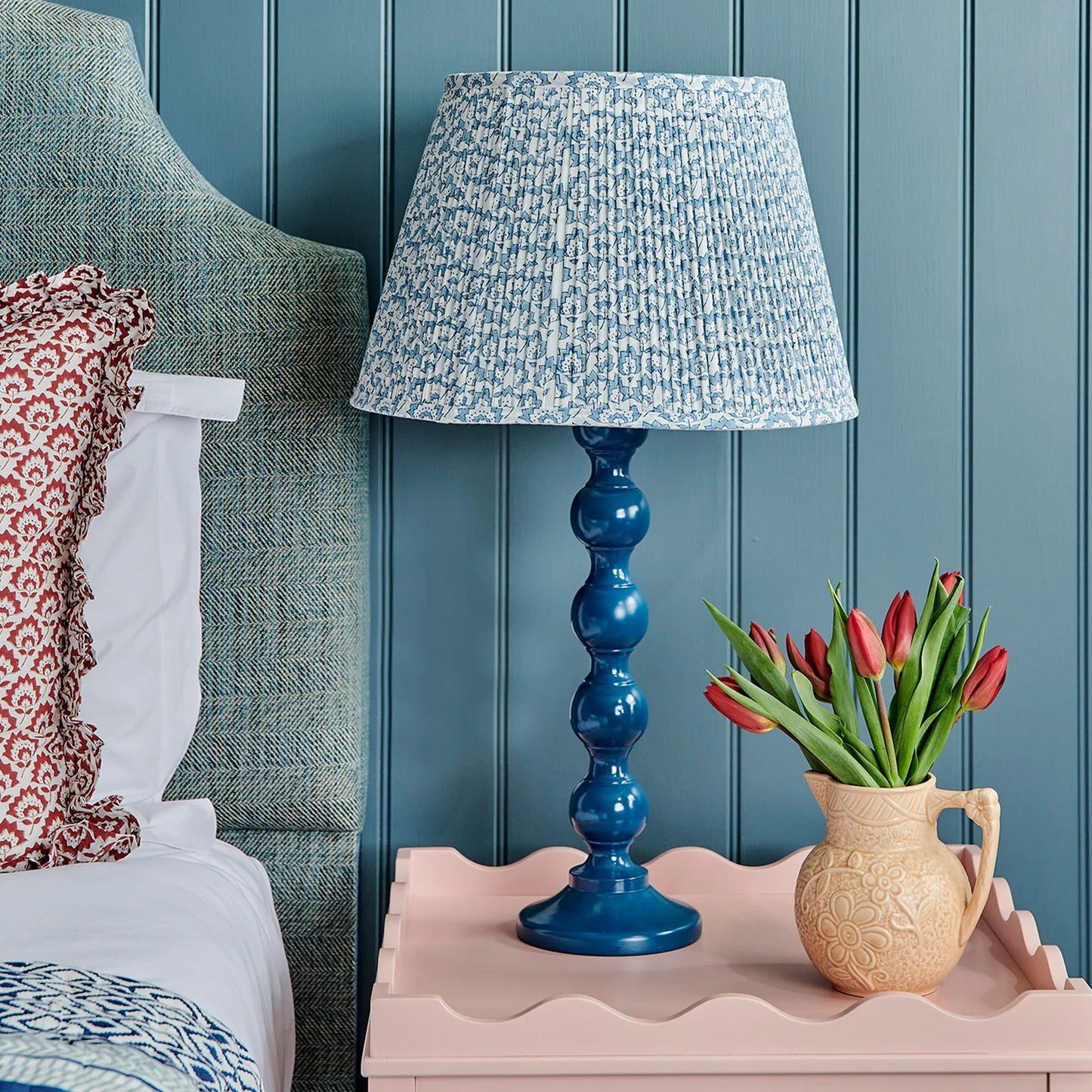
Intimacy is made by a navy lampshade. It focuses the lighting downward and, in the best way possible, makes the area surrounding the lamp feel smaller and more contained by soaking light instead of spreading it widely. A navy lampshade does truly helpful atmosphere work in a vast, cold living room or an eating area that needs to feel more like a formal meeting place and less like a brightly lighted canteen. When the light is turned on in the evening, the deep blue fabric’s lighting takes on a warm, orange aspect that improves the look of any surface it falls on. Cotton navy shades with block prints or ikat patterns add texture to that effect — the light picks up the pattern and projects a subtle variation onto the wall behind it.
Where Light Blue Earns Its Place Instead
Light blue goes somewhere completely different. Pale sky or powder blue creates an airy, wide character that works well in areas where the idea is to feel refreshed rather than overwhelmed. It also diffuses light more freely and brightens the local area rather than cocooning it. Bedrooms benefit from this — particularly in the morning when the lamp is used for getting ready rather than winding down. Bathrooms, reading corners with natural light nearby, and children’s rooms all respond well to the gentler, more open quality that a lighter shade produces. Blue lampshades UK across the full tonal range all share a natural calm, but the lighter end of the spectrum takes that calm and brightens it rather than deepening it.
The Room Itself Is the Deciding Factor, Not Personal Preference
Navy in a small bedroom makes the room feel enclosed rather than cosy — the two are different, and which one applies depends on the existing light levels. In the same small bedroom, a light blue shade keeps things feeling spacious. Conversely, navy in a large, high-ceilinged living room does exactly what you need it to — brings the scale down to something human and comfortable. Light blue in that same room risks disappearing into the volume of space without making enough impact to justify its presence.
The Material Shifts the Experience Further Than You Expect
In the same place, a cotton navy lampshade and a silk navy shade give significantly different results. The sheen of silk lends the tone a more formal, polished look. Cotton has a laid-back, handcrafted feel. At the lighter end of the sound range, the same difference holds true. The difference between a shade that completes the space and one that just fills a gap is knowing the hue and the material before committing.